1. 部分放電 (PD)
Partial Discharge (PD) refers to a localized electrical discharge that only partially bridges the insulation between conductors. Unlike a complete breakdown, PD occurs in regions of high electrical stress where the insulation is weakened or contains defects. It manifests as brief, discontinuous electrical sparks or pulses within gaseous, liquid, or solid dielectric materials. PD does not result in immediate failure but progressively degrades insulation integrity, making it a critical early warning indicator in high-voltage equipment.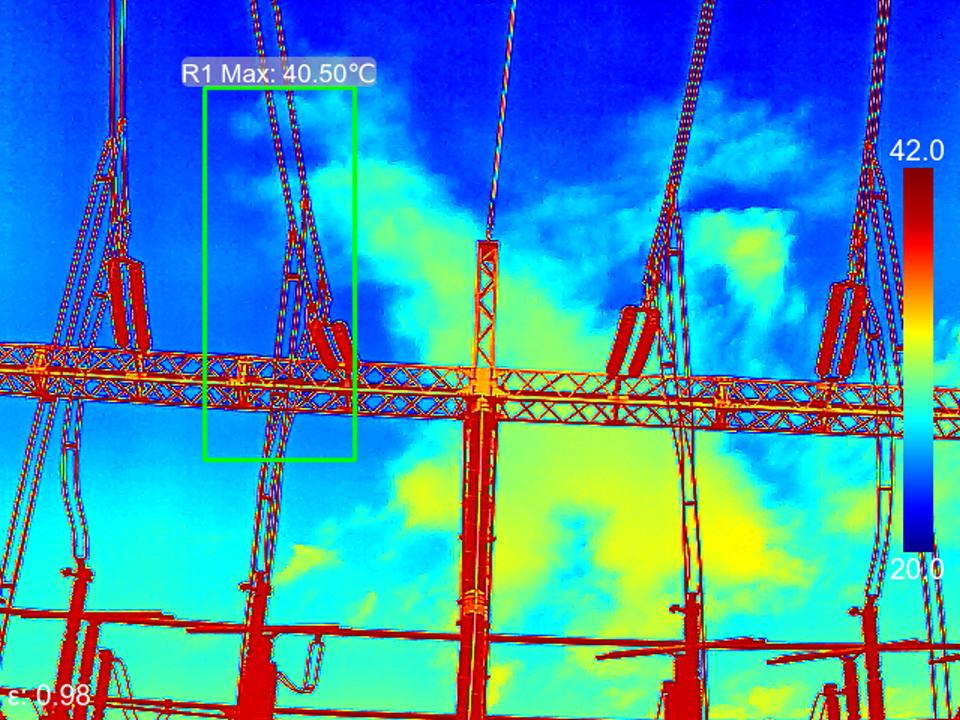
2 の定義。 PD
タイプ:
- コロナ放電: Occurs in gaseous dielectrics (e.g., air) around sharp conductors.
- 表面の主な種類と危険性放電: Arises along the interface of solid and gaseous dielectrics.
- 内部放電: Happens within voids or cavities in solid or liquid insulation.
- フローティング放電: Caused by isolated conductors (e.g., loose components) within insulation.
ハザード:
- 絶縁劣化: PD generates heat, UV radiation, and chemically reactive byproducts (ozone, nitrates), eroding insulation over time.
- 進行性被害: Repetitive discharges create "electrical treeing," forming conductive carbonized channels that reduce dielectric strength.
- 壊滅的な障害: Unchecked PD can culminate in short circuits, fires, or explosions, leading to costly downtime and safety risks.
PD は主に以下によって引き起こされます:
- 材料欠陥: Voids, impurities, or delamination in insulation.
- 経年劣化劣化: Thermal cycling, moisture ingress, or-cracks.
- 汚染: Dust, moisture, or conductive particles on insulation surfaces.
- 高い電気的ストレス: Voltage surges, unbalanced phases, or design flaws concentrating electric fields.
4。 PD 関連の現象と検出方法
PD イベントは多面的な物理的特徴を生成します:
- 電磁放射: Radiofrequency (RF) waves (detectable via UHF sensors).

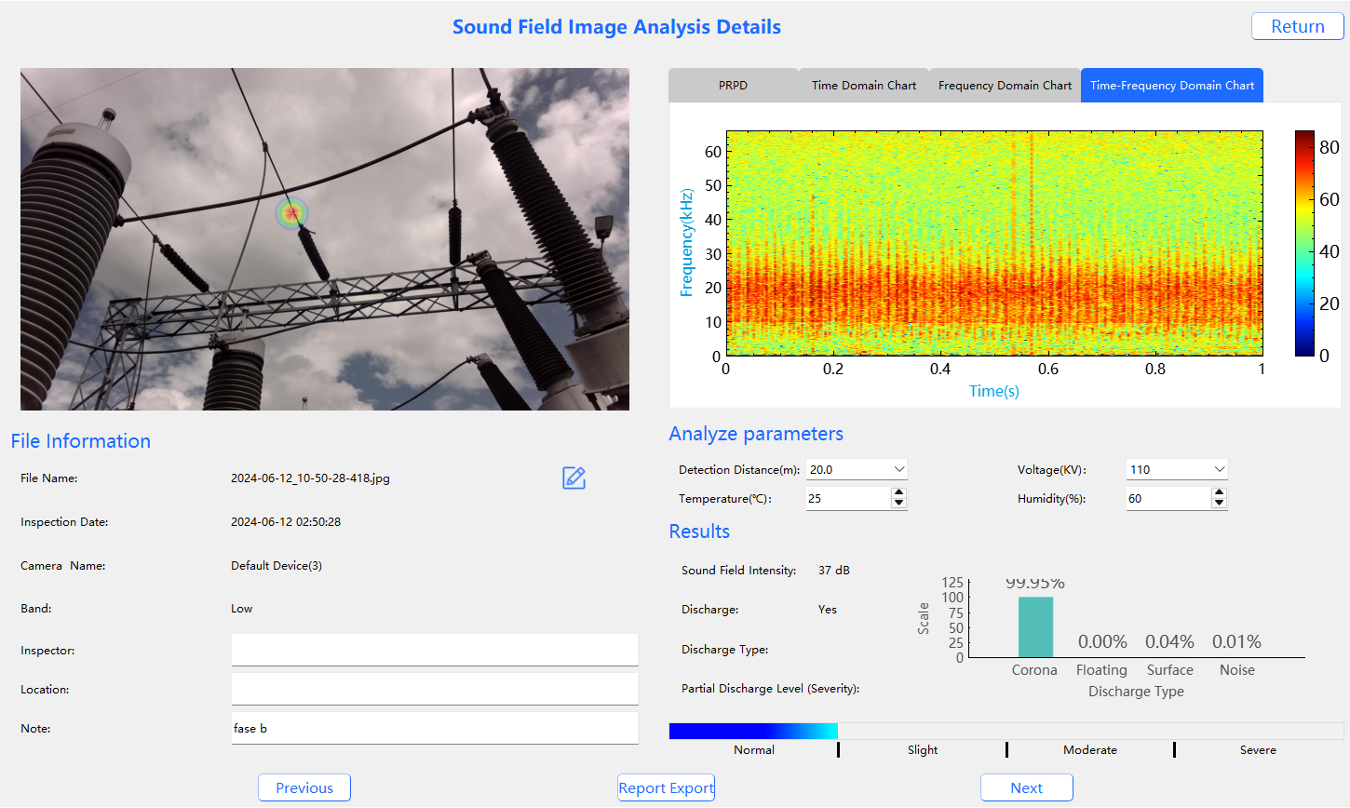
- 音響波: Ultrasonic pulses emitted by discharge impacts (captured by acoustic sensors).
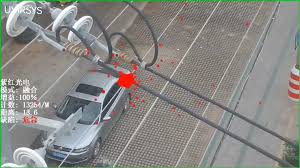
- 発光: Visible/UV photons in gaseous PD (detected by photomultipliers).
- 化学副産物:itored via gas chromatography).
- 電流/電圧パルス: Transient pulses superimposed on waveforms (measured with high-frequency CTs or HV capacitors).
これらの現象は非侵入型 PD モニタリング技術を支え、機器をシャットダウンせずにリアルタイム評価を可能にします。
位相分解部分放電 (PRPD) 解析は、AC 電圧位相角に対する放電の大きさをプロットします。 PD タイプが異なると、異なる「指紋」が現れます:
- コロナ放電: Concentrated near voltage peaks.
- 内部空隙放電: Clustered in regions of rising/falling voltage.
- 表面放電: Spread across multiple phase angles.
- 浮遊放電: Irregular patterns with high magnitude.
位相依存パターンと既知のPD動作を相関させることにより、PRPDを使用するとエンジニアは次のことが可能になります。
- 放電源(ボイドなど)の特定
- 放電の繰り返し率と大きさに基づいて重大度を評価します。
- メンテナンス戦略を調整します (例: 空隙への樹脂注入と表面の洗浄退院).

6。高度な検出: 音響カメラの役割
最新の音響カメラは、超音波センシングと視覚イメージングを組み合わせることで、PD 検出に革命をもたらします:
- 長距離機能: Detect PD sources from safe distances (>100 meters), ideal for substation scanning.
- PRPD生成: Convert ultrasonic emissions into PRPD patterns for real-time PD classification.
- マルチモーダル統合: Hybrid models (e.g., infrared-ultrasound fusion) enable comprehensive asset health assessment:
- 赤外線が抵抗からの熱異常を検出加熱.
- 変圧器、開閉装置、およびケーブルの総合診断.
For integrated PD monitoring solutions, explore the HA3T 音響カメラ, designed for precision diagnostics in high-voltage environments.


