部分放電 (PD) は、高電圧機器の絶縁欠陥を示す最も重要な指標の 1 つです。さまざまな PD 解析手法の中でも、一般に PRPD として知られる位相分解部分放電パターンは、電源周波数の電圧サイクル内で放電パルスがどのように分布するかを明確に統計的に表示できるため、広く使用されています。
A PRPD パターンは通常、次の 3 つの重要なパラメータを表します。
- Phase angle φ: the position of the discharge pulse within the AC voltage cycle, usually from 0° to 360°.
- Discharge amplitude q: the magnitude of the discharge pulse, which may be expressed in pC, mV, dBm, or other units depending on the measurement method.
- Pulse repetition n: the number or density of discharge pulses at a given phase and amplitude.
PRPD パターンの位置、振幅分布、パルス密度、対称性を考慮すると、エンジニアはコロナ放電、表面放電、浮遊電位放電などの絶縁欠陥の可能性を特定できます。
この記事では、これら 3 つの一般的な放電タイプの典型的な PRPD 特性を紹介します。
1。コロナ放電 PRPD パターン
コロナ放電は通常、鋭い先端、バリ、エッジ、突起など、曲率半径が小さい電極周囲のガス絶縁体で発生します。コロナ放電は極性の影響を強く受けるため、正コロナと負コロナの PRPD パターンは通常まったく異なります。
正コロナ放電
正コロナ放電は通常、印加される AC の正の半サイクルと関連しています。 Voltage.
In a PRPD pattern, positive corona pulses are often concentrated near the peak region of the positive half-cycle. Under typical AC test conditions, this may appear around 70° to 110°, although the exact phase range can vary depending on the electrode geometry, voltage level, sensor type, and test setup.
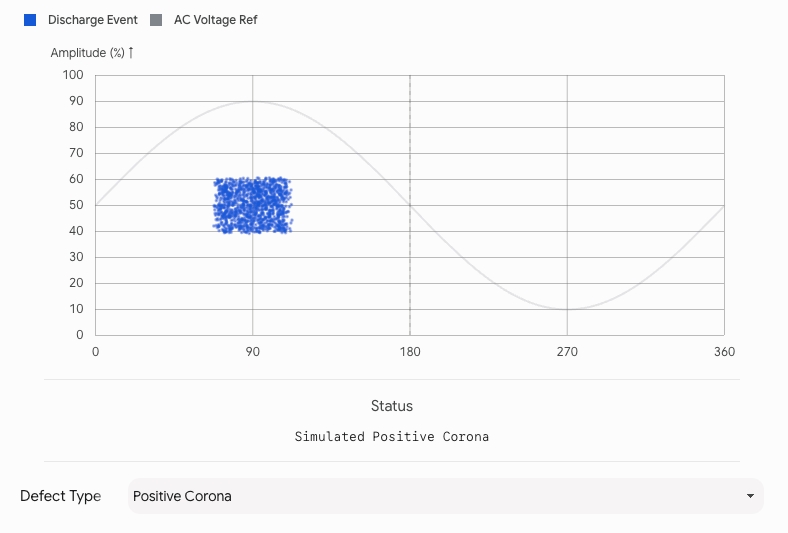
通常、正コロナの振幅分布は比較的安定しており、集中しています。 PRPD パターンでは、密集した水平バンドまたは点の密集したクラスターとして表示される場合があります。印加電圧が増加すると、位相間隔がわずかに広くなり、パルス繰り返し率が増加します。ただし、振幅は他のタイプの絶縁欠陥に比べて大きく増加しない可能性があります。
陽性コロナの典型的な特徴は次のとおりです。半周期
- 電圧ピーク付近に集中した位相分布
- 比較的安定した振幅
- 電圧に応じてパルス繰り返し率が増加上昇
- コンパクトまたはバンド状の PRPD の外観
- 負のコロナ放電
負のコロナ放電は、通常、印加された AC 電圧の負の半サイクルに関連します。多くの場合、負のコロナは正のコロナよりも開始電圧が低く、高周波の繰り返しパルスを生成する場合があります。
正のコロナと比較して、負のコロナは多くの場合より高いパルス繰り返し率を示しますが、単一パルスの振幅は比較的小さい場合があります。したがって、PRPD パターンは、負の半サイクル ピーク付近に非常に高密度で低振幅のクラスターとして現れる可能性があります。
On a PRPD pattern, negative corona pulses are commonly concentrated near the peak region of the negative half-cycle, often around 250° to 290° under typical conditions.
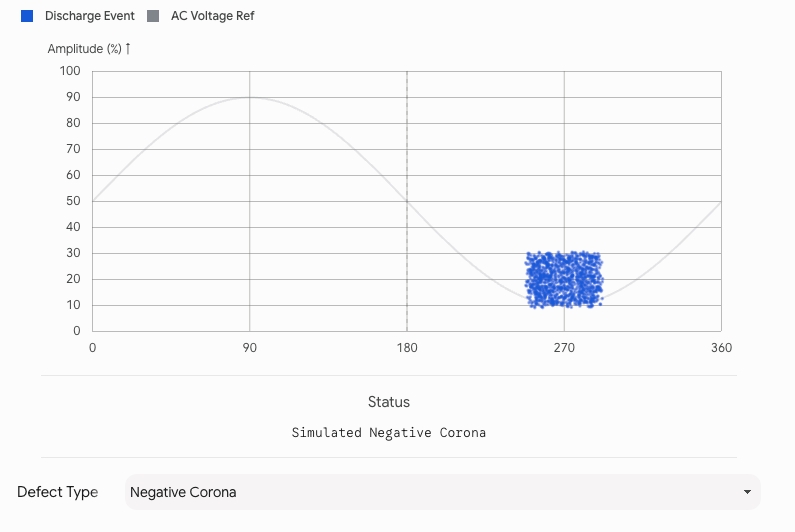
負のコロナの典型的な特徴は次のとおりです。半サイクル
高いパルス繰り返し率
- 比較的小さい単一パルス振幅
- PRPD上の高密度の低振幅クラスターパターン
- 強い極性依存性
- 2。表面放電 PRPD パターン
- 表面放電は、固体絶縁体と気体または液体絶縁体の界面に沿って発生します。多くの場合、表面の汚染、湿気、経年劣化、不十分な絶縁設計、または不均一な電界分布に関連しています。
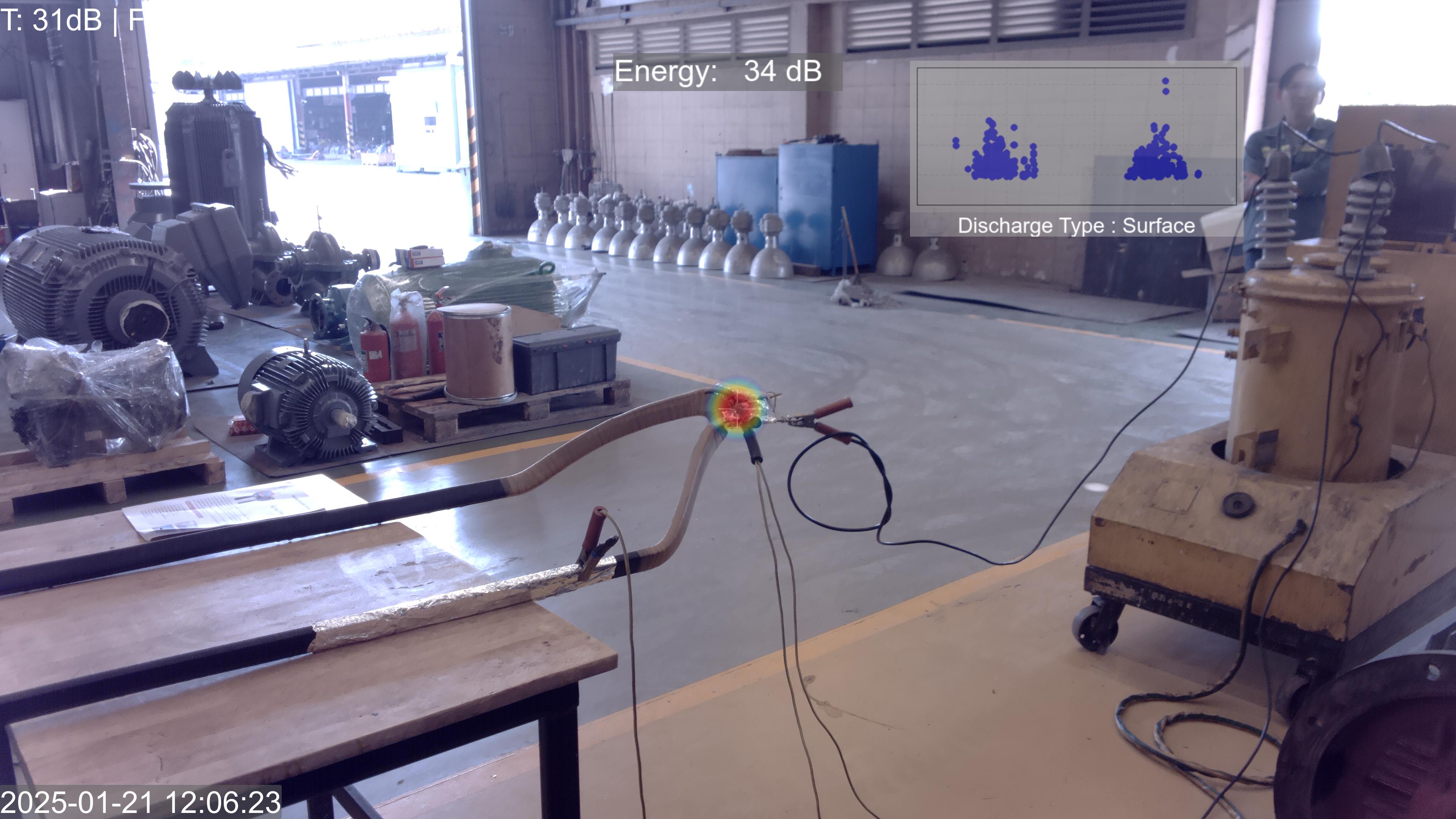
表面放電の最も重要な特性の 1 つは、その非対称性です。多くの場合、正の半サイクルでの放電振幅はより大きく、より広範囲に分布します。一方、パルスの数は比較的少ない場合があります。負の半サイクルでは、放電振幅はより小さく、より集中する可能性がありますが、パルス密度はより高くなる可能性があります。
その結果、沿面放電 PRPD パターンは、くさび形、傾斜した、または「ウサギの耳」の外観を示すことがよくあります。
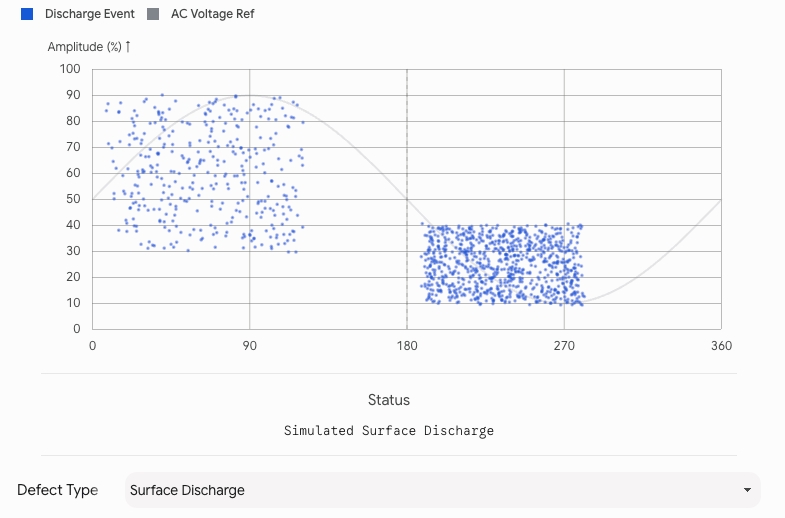
Unlike corona discharge, surface discharge usually appears in both positive and negative half-cycles. It is commonly observed on the rising edges and peak regions of the applied voltage waveform. Typical phase regions may include 10° to 90° in the positive half-cycle and 190° to 270° in the negative half-cycle.
地表放電には以下が含まれます:
正と負の両方の半サイクルにおける放電活動
2 つの半サイクル間の明らかな非対称
一方の半サイクルでのより広い振幅分散
- 反対側での密なパルス分布半サイクル
- くさび形またはウサギの耳のような PRPD 輪郭
- 表面汚染、湿度、または追跡との強い関係
- 表面放電は次のとおりである必要があります。絶縁物のトラッキング、侵食、炭化、そして最終的には絶縁破壊につながる可能性があるため、真剣に受け止めてください。浮遊電位放電 PRPD パターン
- 浮遊電位放電は、高電圧機器内の金属部品が接地されていない、または接続が不十分な場合に発生します。例としては、ネジの緩み、シールド カバーの浮遊、金属粒子、または導電性コンポーネントの切断などが挙げられます。
- 交流電界の下では、これらの浮遊金属部品は誘導電荷を蓄積し、小さなギャップを介して近くの接地または通電された構造に定期的に放電する可能性があります。
浮遊電位放電の主な特徴は次のとおりです。その対称性。
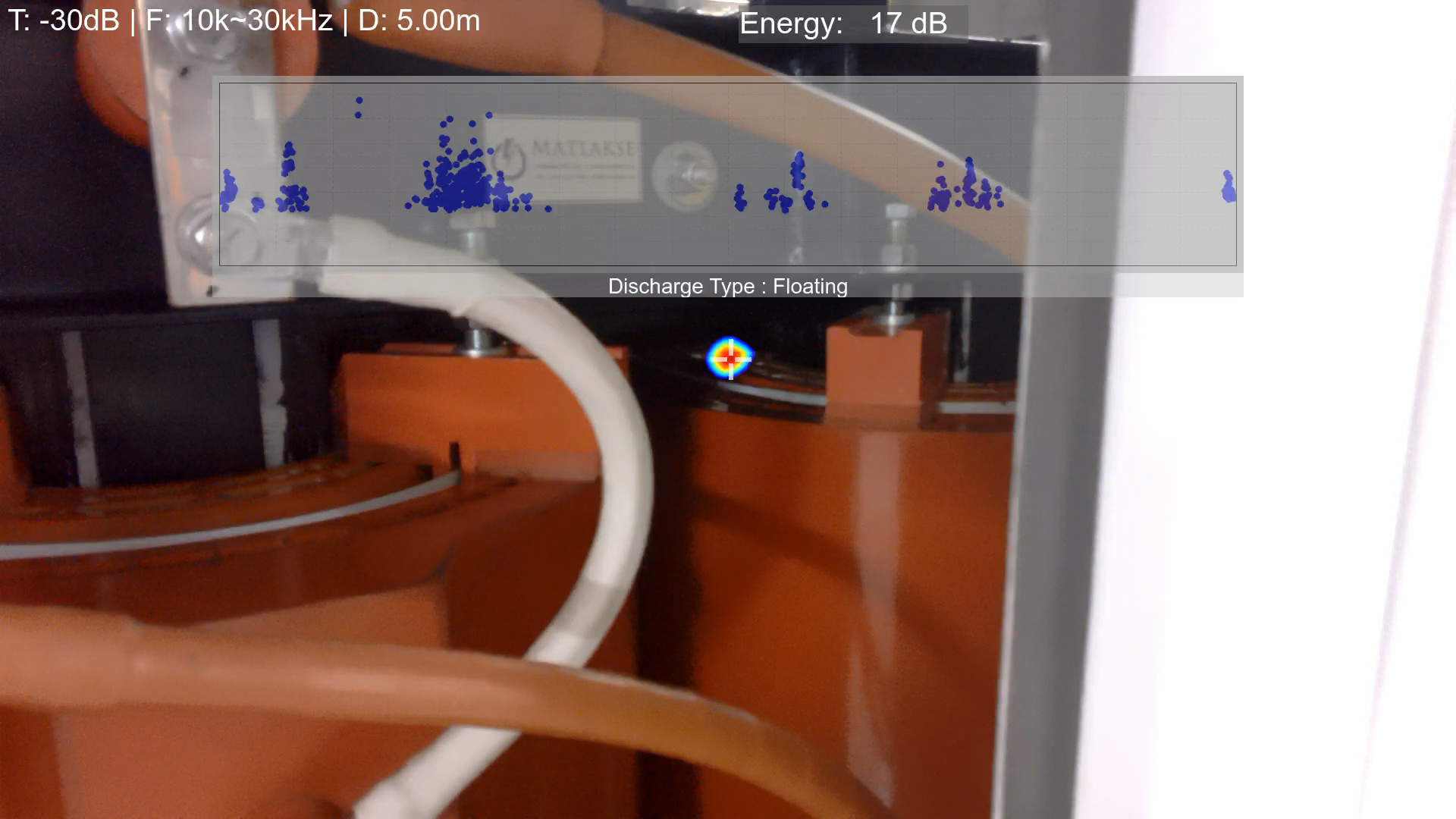
正と負の半サイクルの放電クラスターは、多くの場合、位相幅、振幅レベル、パルス密度が類似しています。通常、振幅は比較的安定しており、PRPD パターンは 2 つの対称的な密集クラスターとして現れることがよくあります。
浮遊電位放電の典型的な特徴は次のとおりです。半サイクル
2つの半サイクル間の高い対称性
In a PRPD pattern, floating potential discharge is usually concentrated shortly after the zero-crossing points of the voltage waveform. Typical discharge phase regions may appear around 30° to 80° and 210° to 260°.
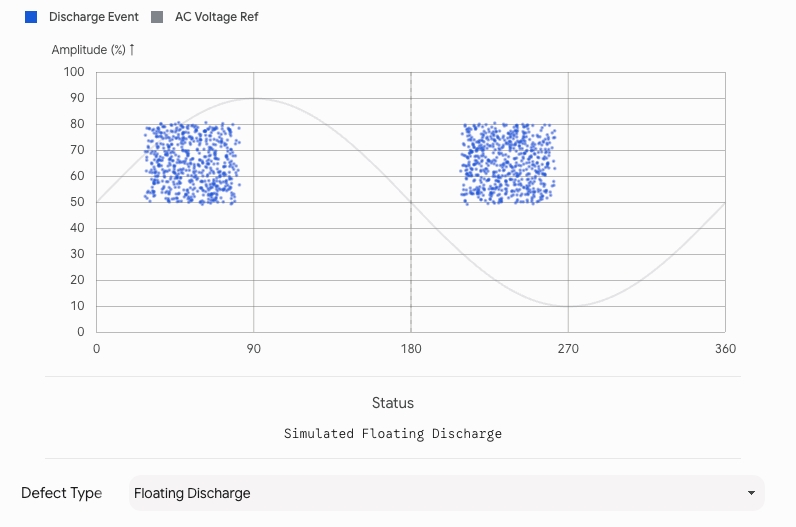
安定した放電振幅
緻密で明確なクラスター
両側で同様の位相幅とパルス密度
- 緩んだまたは接地されていない金属コンポーネントとの関連の可能性
- 浮遊電位放電は機械的欠陥または不良に関連していることが多いため電気接続は、GIS、開閉装置、変圧器、その他の高電圧機器では重要な警告サインである可能性があります。
- 典型的な PRPD 特性の比較
- PRPD 分析は強力な診断方法ですが、判断の唯一の基準として使用すべきではありません。絶縁欠陥。
- 実際のフィールド アプリケーションでは、PRPD パターンは次のような多くの要因の影響を受ける可能性があります。帯域幅
- トリガーしきい値
ノイズ干渉
電圧レベル
| Discharge Type |
Typical Source |
Phase Characteristics |
Amplitude and Density |
PRPD Appearance |
| Positive Corona |
Sharp points, burrs, small-radius electrodes |
Mainly near the positive voltage peak |
Stable amplitude, concentrated distribution |
Compact cluster or horizontal band |
| Negative Corona |
Sharp electrodes in gas insulation |
Mainly near the negative voltage peak |
High repetition rate, lower pulse amplitude |
Dense low-amplitude cluster |
| Surface Discharge |
Solid-gas or solid-liquid insulation interface |
Appears in both half-cycles, often asymmetric |
One half-cycle may have higher amplitude; the other may have higher density |
Wedge-shaped or rabbit-ear-like pattern |
| Floating Potential Discharge |
Ungrounded or poorly connected metal parts |
Appears in both half-cycles, often after zero-crossing |
Stable amplitude and similar pulse density in both half-cycles |
Two symmetrical dense clusters |
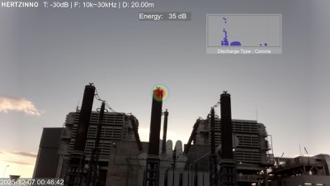
The Partial discharge pictures from Hertzinno Acoustic Camera:
Floating Discharge
Corona Discharge
Important Notes for PRPD Interpretation
設備構造
接地条件
- 信号極性
- 位相基準精度
- 複数の同時放電源
- たとえば、同じ欠陥でも、IEC 60270 電気的方法で測定すると、異なる振幅特性を示す場合があります。メソッド、HFCT センサー、UHF センサー、TEV センサー、または超音波センサー。さらに、外部ノイズは、部分放電に似た位相関連またはランダムなパターンを生成する可能性があります。
- したがって、信頼性の高い PD 診断では、PRPD 分析と、時間領域のパルス波形、周波数スペクトル、PRPS 傾向、マルチセンサー比較、音響または UHF 位置特定、機器の動作などの他の情報を組み合わせる必要があります。条件.
- 結論
- PRPD パターン解析は、電源周波数電圧サイクル内の部分放電の挙動についての貴重な洞察を提供します。絶縁欠陥が異なれば、位相、振幅、パルス密度特性も異なる傾向があります。
- コロナ放電は通常、強い極性依存性を示します。正のコロナは通常、正の電圧のピーク付近に集中しますが、負のコロナはパルスの繰り返しが多い負の電圧のピーク付近に集中することがよくあります。
- 表面放電は通常、両方の半サイクルで発生し、多くの場合重大な非対称性を示します。これは、汚染、湿気、または表面絶縁の劣化を示している可能性があります。
- 浮遊電位放電は、通常、正と負の半サイクルで 2 つの比較的対称な放電クラスターを生成します。これは、多くの場合、接地されていない金属または接続が不十分な金属に関連しています。コンポーネント.
これらの典型的な PRPD 特性を理解することで、エンジニアは絶縁欠陥をより適切に特定し、機器の状態を評価し、重大な障害が発生する前に予防保守措置を講じることができます。
ただし、正確で信頼性の高い結果を得るには、PRPD の解釈を現場での経験、測定条件、および追加の診断データと常に組み合わせる必要があります。
Conclusion
PRPD pattern analysis provides valuable insight into the behavior of partial discharge within a power frequency voltage cycle. Different insulation defects tend to produce different phase, amplitude, and pulse density characteristics.
Corona discharge usually shows strong polarity dependence. Positive corona is commonly concentrated near the positive voltage peak, while negative corona is often concentrated near the negative voltage peak with high pulse repetition.
Surface discharge typically appears in both half-cycles and often shows significant asymmetry, which may indicate contamination, moisture, or surface insulation degradation.
Floating potential discharge usually produces two relatively symmetrical discharge clusters in the positive and negative half-cycles, often related to ungrounded or poorly connected metal components.
By understanding these typical PRPD characteristics, engineers can better identify insulation defects, evaluate equipment condition, and take preventive maintenance actions before serious failures occur.
However, PRPD interpretation should always be combined with field experience, measurement conditions, and additional diagnostic data to achieve accurate and reliable results.


